
When Traditional Church Planting Doesn’t Work: Persisting in Ministry Among a Marginalized People
by Tiffany
How do you plant a church when nothing seems to work? When you want to talk about people’s eternal future, but they only seem to care about the present? When you take new believers to a traditional church and they fall asleep in the pews because they aren’t used to sitting and listening to an academic message? Is trying to plant a church among such a difficult people just an exercise in futility?
This is the dilemma Christar workers, James and Dawn* face as they try to bring the gospel to the Roma (Gypsy) people of Albania. They have been a part of many attempts to plant a church among the Roma in their city, trying to gather people in their home, in other people’s homes and even outside in a yard. But these efforts all dwindled away.
While the word “gypsy” may conjure up images of caravans, fortune tellers and tambourines, the Roma culture is more nuanced. It is believed that the Roma people originally came from Northern India, and even though they have lived in Europe and the Middle East for centuries, most of them still speak Romani, a language with Indian roots. They do not value permanence or possessions and are not trying to establish a homeland, but rather live scattered in different tribes. They do, however, value community and are known to be an affectionate and artistic people who love music, dancing and conversation.
The Roma comprise 3-6% of the population of Albania. Though they have taken on many of the cultural markers of the people around them, including converting to Islam and speaking the Albanian language outside of the home, other Albanians view them as different, and they are distrusted in the community. Unlike the stereotype, they are not a completely nomadic people who live in caravans; they frequently reside in makeshift, illegal houses that are occasionally bulldozed by the government.
Poverty and unemployment are high among the Roma, and education levels are low compared to those of their Albanian neighbors. Many of their girls get married at age 13 or 14, which is illegal and looked down upon by other Albanians. They are considered dirty and untrustworthy, and James and Dawn have seen Albanians refuse to touch Roma people or eat any food that they have prepared. Like the Samaritans in Jesus’ day, they are viewed as a despised minority.
In the past few decades, large movements of Roma/Gypsy people have come to faith in Christ throughout Europe, but this has not been true in Albania. Roma usually choose to claim the religion of the people around them, whether it be Catholic, Orthodox or Muslim. In Albania, they say that they are Muslim, and many men will go to the local mosque. In practice, however, they are animistic, and spirits are more important to them than God.
The Roma seek to protect themselves against the evil eye and visit Muslim magicians for curses against their enemies. Many believe that all roads lead to God, and when they are exposed to the Bible, they often treat it as a magical object that can help them, more than as the source of spiritual truth. This combination of outward acceptance of Islam and deep roots in animism has made the Roma in Albania much more resistant to the gospel than the Roma throughout Europe.
James and Dawn have seen many Christians attempt to make inroads into Roma communities and earn their trust by helping them out of their poverty. While this has often initially resulted in an increased interest in attending Christian programs, too often the people receiving aid became demanding, angry and sometimes even violent as soon as the aid stopped. Others did not actually want the help that Christians were giving, like building them a solid home, because it made them different from others in their community. “The mistake some Christians made was treating them primarily as poor people who need financial assistance rather than Roma people who have a unique culture that needs to be understood,” James says.
How then can Christians gain entrance into the Roma community to share the good news about Jesus and hopefully plant a Roma church? Rather than running aid programs, James and Dawn have focused on developing friendships by spending hours in conversation at coffee shops and people’s homes. Since other Albanians consider the Roma to be dirty and refuse to touch them, James and Dawn show respect by drinking their Roma neighbors’ coffee, allowing the Roma to serve them and physically entering their world. They try to become a part of their lives.
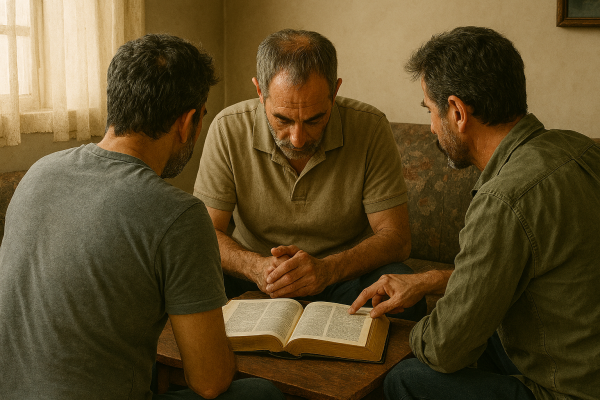
As part of these conversations, James and Dawn present “spiritual snacks”: little phrases or verses to see if someone is interested in spiritual things. For those who seem interested, they continue to have spiritual conversations or invite them to be part of an interactive group Bible study. Although most people don’t show interest, James and Dawn are encouraged when they see some people starting to understand the gospel.
Discipling those who profess faith in Christ brings its own set of hurdles. Many Roma are willing to “pray the prayer” of salvation, but since they think all roads lead to God and want to make their friends happy, this is not necessarily an indication of faith.
Others may be true believers, but they are unwilling to get baptized because they don’t want to be different from others in their community. Their greatest fear is being separated from their group, so even if they do believe in Jesus, taking the public step of baptism and announcing that they have a new identity in Christ is a huge barrier.
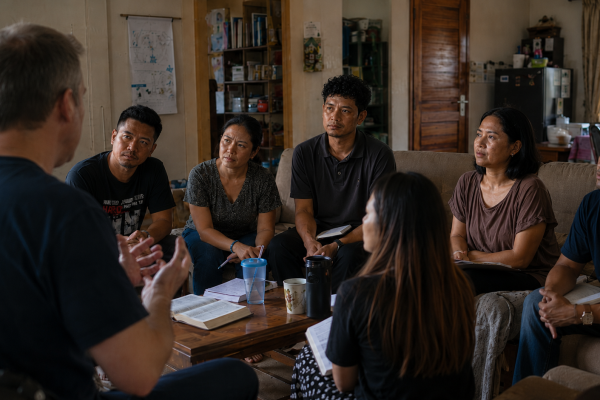
But they haven’t given up. Recently, James and Dawn started partnering with workers from other organizations in their city to demonstrate church for the Roma people, meeting regularly with about a dozen cross-cultural workers and 20 Roma, only a few of whom are believers. The Roma who attend come from different tribes and speak three distinct dialects, so they use the Albanian language during the service. They are not accustomed to sitting and listening, so rather than giving a long sermon, a worker gives a short lesson with opportunities for questions and interaction. They sing songs in both the Albanian and Romani languages and then end with a biblical blessing, which some Roma consider one of the most important parts of the service.
It remains to be seen whether this church-planting effort will be successful when so many other attempts have failed. James and Dawn are seeing changes in people’s lives, and a good group of young, married girls are attending, but very few men are willing to come to a meeting that seems dominated by women and children. One man who does come is a relatively strong believer, but he thinks that the cross-cultural workers are the only spiritual ones and that he could never become a leader in the church. In order for a successful church plant to happen among the Roma in Albania, God needs to break down distrust among people from different tribes, remove the barriers keeping men from following Christ and raise up leaders from among the Roma people.
This seems like an impossible task, but with God, all things are possible. Like the Samaritans in the days of Jesus, the Roma may be a people who are disdained by those around them, but they are loved by God. Jesus gave us the example of crossing geographical and cultural barriers to bring the good news to the Samaritans and showed us that it is worth it to keep trying new ways to preach the gospel and plant a church in this vibrant community.
*Names have been changed
Related Projects
Related Stories