
Social Media for the Gospel: Technology as a Tool for Transformation
When Jason* saw social media posts about Jesus in his native Southeast Asian language, he became curious—even though it was against the law for a Muslim like him to leave Islam and become a Christian. His curiosity started a conversation. After he liked one of the posts, a local believer reached out and they started chatting online.
Jason developed such an intense desire to learn more about Jesus that he moved to a large city where he could talk to Christians in person. First, he went to a church of believers from another ethnic group, but he was kicked out because, like many Christians in the country, the church members were afraid that the government would shut them down if it saw a Muslim attending their services.
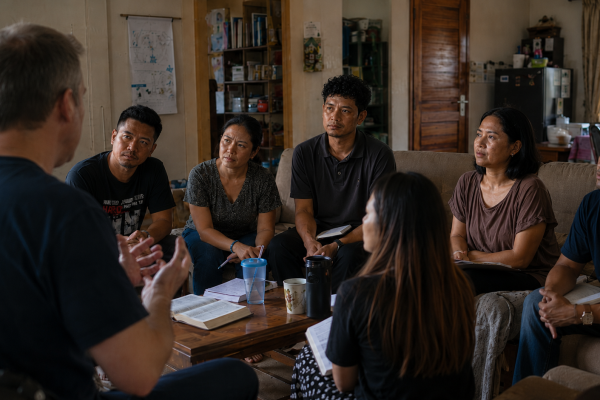
But then, he started meeting with Christar worker Trent,* who headed up the social media ministry that had first sparked his interest. After six weeks, he became a follower of Jesus.
Now Jason is being discipled by two other Christar workers, and they have started reaching out to local fishermen by hanging out at fishing ponds and starting spiritual conversations. It all started by seeing posts on Instagram.
Jason’s testimony is just one example of how social media outreach in Southeast Asia is bearing fruit for the gospel among the “Sutra” people, whose name we have changed for security reasons. All members of this group of over 20 million people are legally considered to be Muslims, and due to strict anti-conversion laws, many Muslims are afraid to discuss Christianity in person. In addition, these laws cause many Christians to be fearful of telling their Muslim neighbors about Christ.
Cultural barriers also prevent the spread of the good news, as Christians and Muslims usually belong to different ethnic groups. These challenges mean that while sharing the gospel in person is still an important strategy in reaching the Sutra, it is not sufficient. Christians must try to reach them broadly and privately using technological tools like social media.
In 2019, a group of cross-cultural workers and local believers started a social media ministry aimed at producing Christian content that appealed to the language and culture of the Sutra people. Trent, who has decades of missions experience in multiple countries throughout the region, teamed up with a handful of local Christians whom he was discipling and another Christian agency that had experience in telecommunications to start producing biblical content for social media.
Since then, this effort has grown into a flourishing ministry that’s reaching people with little or no access to the gospel. Trent is guiding several local believers as they use Bible lessons from popular Christian programs in English as a springboard to create content that would make sense to a Southeast Asian Muslim. Another believer creates six short videos a month that talk about the parables of Jesus for use on Facebook and Instagram. Still another believer is writing Christian songs in the language and style of the Sutra people and posts them on Spotify. Every day this group posts a Bible lesson, a song and a story or video in the Sutra language.
Last year, people engaged with this content more than 2.5 million times. The ministry buys ads on Facebook and Instagram that focus on the Sutra, and many, like Jason, are curious when they see Christian content in their language. These social media posts pique the interest of both deeply devout Muslims and those who have grown tired of Islam and become more secular in their thinking. Regardless of where they fall on the religious spectrum, when they click on a post, the team of local believers is ready to connect with them, seeking to chat one on one online or even meet in person to talk about matters of faith.
As the team has sought to get the hundreds of hours of biblical content they’ve created intro the hands of more people, they began to load it into MP4 players and later MegaVoice devices (solar-powered handheld players that are generally used for distributing audio and video Bibles). Three Sutra believers use this technology to share the gospel with people they have met face to face. Though some Muslims refuse to take the player because they know that it could be dangerous for them, the team has still been able to pass out about 200 MP4 players or MegaVoice devices a year.
As is often the case in ministry among Muslims, the fruit from the distribution of these devices has been slow and scattered. In March, however, God used the biblical content on one MP4 player to dramatically show His power. A Muslim family in a remote town struggling with frequent, discouraging illnesses received one of these players from a local believer who told them to listen to the sermons and songs and to ask Jesus to heal them. The next day, the entire family was healed, and they prayed to Jesus as their Savior.
This family then passed the MP4 player to another family who was struggling, and this second family also experienced healing and repentance. This happened to a third family and then a fourth, as each household heard the words of truth in their own language and culture and experienced the power of Jesus. Now there are 23 new believers in a remote town in Southeast Asia because God used social media content downloaded onto one device that families passed around like a well-worn Bible.
Christar is committed to sharing the gospel in creative ways, especially with people who might not otherwise hear the good news. Social media is an effective platform to introduce people to Jesus, pique their curiosity about Christianity and connect them with local believers and Christar workers who can follow up with them personally. How beautiful are the Instagram posts that bring good news!
Participate Through Prayer:
- Praise God for using creative online ministry to introduce people like Jason to the gospel.
- Pray for wisdom for the local team as they continue to create content and interact with those who express interest.
- Ask the Lord to protect the believers involved in this ministry.
- Pray that many more people will place their faith in Christ as a result of this creative outreach!
Related Projects
Related Stories